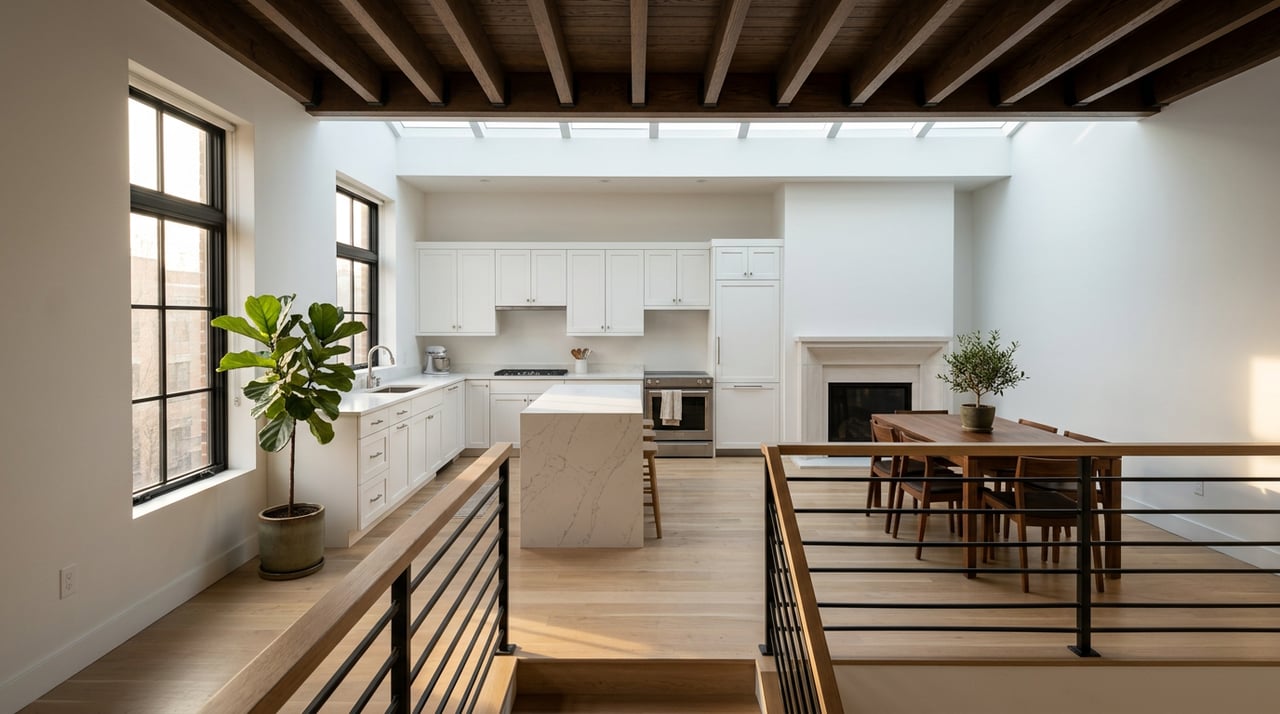
Why Madison's Condo Median Fell in July While Prices Actually Rose
September 10, 2026
September 10, 2026
A condo buyer scrolling market data in Madison this summer saw a number that looked like bad news: the median condo sale price for Dane County dropped 3% year over year in July 2026, down to $335,250 from $345,000 the July before. Read that number alone and the story writes itself. Condos are softening. Maybe wait it out.
In that same window, the price per square foot across those same condo sales rose 10%, from $233 to $256. And in downtown Madison specifically, a buyer working with a local team closed on a condo for $20,000 under asking in early August, the kind of outcome that only happens when sellers are the ones under pressure. Two numbers from the same market, the same month, pointing in opposite directions. That is not noise. It is math, and once you know how it works, you know which number to trust and where the real negotiating room sits this fall.
Median and average sale price both get reported as if they measure the same thing. They do not. The median tells you which single transaction happened to fall in the middle of the pack that month. The average and the price per square foot tell you something closer to value, because price per square foot adjusts for size.
In Dane County's July 2026 condo numbers, the average sale price actually rose 5%, from $373,515 to $392,174, even as the median fell. That gap between a rising average and a falling median, alongside a price per square foot climbing 10%, points to one explanation: more of what closed in July 2026 was smaller and less expensive than what closed in July 2025, while the value of comparable square footage kept climbing. The market did not get cheaper. The mix of what sold shifted toward smaller units, and that alone can drag a median down even while every individual condo is worth more per square foot than it was a year ago.
This matters if you're comparing Madison against a suburb like Middleton or Verona using nothing but a headline median from a portal site. The number tells you what closed, not what a comparable unit is worth.
Downtown Madison condo sales run through a small enough sample each quarter that the mix-shift effect shows up even more sharply. One boutique Madison brokerage's own Q1 2026 recap counted 21 downtown condo sales, up from roughly 17 a year earlier, a 24% increase. The same report flagged the reason behind it: one-bedroom condo sales had doubled, from 6 units to 12. That single change, more starter-size units closing in the same quarter, is enough to pull a small-sample average around on its own. The report's price per square foot figure, the number that isn't distorted by unit size, still climbed 3% year over year to $430.
Part of why downtown is so sensitive to this is the range of buildings competing for the same buyer. A one-bedroom at a historic conversion like the Baskerville Building sells into a different price tier than a high-floor unit at Metropolitan Place or a lake-view corner unit in a newer tower like Capitol Point. Older buildings like Nichols Station or The Loraine add still more variation. When a slightly higher share of a quarter's closings comes from the smaller end of that range, the quarter's average moves even though nothing about any individual building's value has changed.
By the following quarter, the same brokerage described the market as simply normal: one fewer condo sold than the same period a year earlier, prices flat to slightly up, a hot start in early spring followed by the typical late-June lull. That's a market behaving the way downtown Madison condos usually behave in a given year, not one in decline.
Dane County logged 212 expired condo listings through July 2026, the most since 2014.
If the median-versus-average gap is mostly a mix-shift story, the expired-listing number is a real structural signal, and it's the one worth paying attention to if you're deciding when to act.
Through the first half of 2026, 19% of all Dane County condo listings expired without selling, compared to 14% for single-family homes. As of a July snapshot, condo buyers had 2.5 months of supply to work with, against 1.8 months for single-family homes, meaning more choice and less urgency for anyone shopping condos specifically. In July alone, accepted offers on Dane County condos fell 30% year over year, from 148 to 104, while available inventory (condos on the market without an accepted offer) climbed 43% year over year, to 345 units as of early August.
Put together, that's fewer buyers moving fast, more inventory sitting, and a rising share of sellers pulling listings that didn't work. That's a genuine shift toward buyer leverage, and it's distinct from the median dropping because smaller units happened to sell. It's also consistent with what happened downtown in early August, when a buyer working with a local agent closed on a condo $20,000 under list. That kind of outcome becomes more common as inventory builds and sellers who listed earlier in the summer are still looking for the right buyer heading into fall.
If you're weighing a Madison condo against a single-family home in Fitchburg or a move-up property in Middleton, the median alone will mislead you more often than it helps. A few things worth asking before you anchor on a headline number:
Single-family homes showed a version of this same divergence in July 2026, though in the opposite direction: the county median rose 2% to $514,900 even as the average fell 2% to $594,449 and price per square foot fell 4% to $257. Different mechanism, same lesson. Whichever property type you're comparing, the single number on a portal page is rarely the whole story.
Does this mean it's a bad time to sell a condo in Madison? Not necessarily, but it means pricing has to be accurate. With expired listings at a 12-year high through July 2026, the sellers losing ground are the ones priced ahead of what comparable units, by square footage, are actually closing for.
Is this the same pattern for houses, or just condos? Condos are showing the sharper version of this split. Single-family homes in Dane County showed median and average moving in opposite directions too in July 2026, but the gap was smaller and the underlying cause was different, tied more to which price tier of home was selling than to a shift toward smaller units.
How long does this kind of buyer leverage usually last? Condo and home inventory in Dane County typically continues rising into fall before the market slows for winter, which means the window for negotiating room tends to be open for a few more months rather than closing immediately.
The number on the listing page is a starting point, not the answer. If you're trying to figure out what a specific Madison condo or house is actually worth against what else is on the market right now, that's exactly the kind of read Madison Home Guides can help you get straight before you write an offer or set a price. Let's Connect.

Alan is committed to delivering a seamless and rewarding real estate experience through expert advice, strategic marketing, skilled negotiation, and exceptional client service tailored to your unique needs.
Alan Feder
ADDRESS 5940 SEMINOLE CENTRE CT STE 310 MADISON, WI 53711