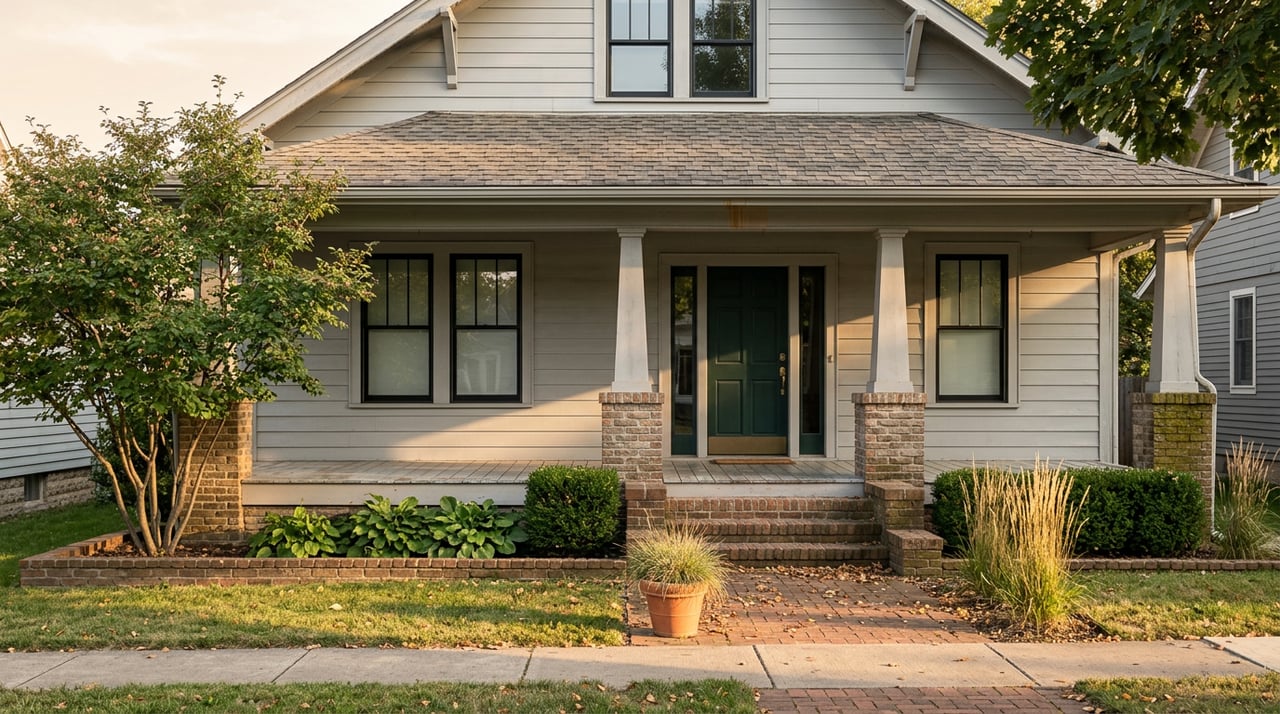
The Madison Public Market Didn't Come to Compete With Atwood Avenue. It Came to Restock It.
September 10, 2026
September 10, 2026
Walk into the Madison Public Market on a Tuesday afternoon and you'll find Ken Norton scooping cones at Chocolate Shoppe, Carmell Jackson plating soul food a few stalls over at Melly Mell's, and Sarah Dawson coiling yarn behind the counter at Isthmus Yarns, the fiber shop she started earlier this year. The building at 202 N. First Street opened its doors in late July 2026 after a stretch of delays long enough that most near east side residents had stopped checking the timeline. Now it's here, and the honest question isn't whether it's worth a visit. It's what it actually does to a neighborhood that already had one of the best food corridors in the city a short trip away on Atwood Avenue.
The easy story is that Madison got a shiny new food hall. The more useful story, the one that actually tells you something about how this neighborhood works, is that the Public Market was built to manufacture exactly what Atwood Avenue grew by accident over the last fourteen years. If you want to understand what's coming to Schenk-Atwood next, the Public Market is where you should be watching.
The market launched with a small, specific roster and has been adding names steadily since. As of this fall, the businesses you can actually walk in and buy something from include:
The full build-out calls for two dozen or more permanent spaces, with a 2,000-square-foot anchor still open in the northeast corner for a future restaurant with patio seating. That's not a finished product. It's a work in progress, on purpose.
Read the market's own description of itself and the language gives away the intent. On its merchant page, the Public Market describes itself flatly as a small business incubator and accelerator, one built with affordable rent, shared commercial kitchen access, and a customer base the market projects at half a million visitors a year. The stated goal isn't to keep every vendor forever. It's to get most of them to a point where they no longer need the subsidy, then watch them move on to their own storefronts.
CEO Keisha Harrison has framed the whole project around what she calls "Equity Through Entrepreneurship," pointing to lower rents, tenant improvement grants that don't have to be repaid, and mentorship from established local businesses as the mechanism that gets a food cart to a lease it can carry on its own. That's a specific, deliberate design choice, not a marketing line. It means the roster inside that building right now is not the finished lineup. It's the current graduating class.
Here's the part that gives the Public Market's model its proof of concept, and it's sitting a short ride east on Atwood Avenue. One Barrel Brewing opened there in July 2012 as Madison's first nanobrewery, a genuinely small operation brewing one barrel at a time out of a storefront that had no track record of drawing a crowd. Fourteen years later, One Barrel is still pouring, and its beer was still showing up at the Schenk's Corners Block Party this past August. That's not a nostalgia detail. It's a business that started exactly the size the Public Market is trying to incubate today, grew on its own timeline with no formal accelerator behind it, and outlasted the trend cycle entirely.
Atwood Avenue built its current identity the slow way, one small operator at a time, over decades, without a program name or a foundation behind it. The Public Market is trying to compress that same trajectory into years instead of decades by giving new vendors the customer traffic and kitchen infrastructure that used to take an operator a decade of grinding to earn on their own. If the model works the way the city intends, some of the names you see at the Public Market counter this fall are the names you'll see on an Atwood Avenue lease in a few years, the same way One Barrel went from a nano-batch experiment to a fixture at the neighborhood's biggest street party.
The geography matters more than it looks like on a map. First and East Johnson Streets to Atwood and Winnebago is close enough that a resident isn't choosing between two neighborhoods so much as deciding which half of one loop to hit first. The Public Market gives you the newer, rotating mix, the vendor testing a concept for the first time, the retail spaces still filling in. Atwood Avenue gives you the proven stretch, including Ledger Coffee's smaller Winnebago Street outpost, which opened in April 2026 as a second location for the small-batch roaster that still runs its original spot inside the historic Garver Feed Mill.
Treat them as one circuit and the neighborhood makes more sense. Start a Saturday morning at the Public Market for coffee and a look at whichever new vendor just signed a lease, then head east to Atwood for lunch at one of the corridor's longer-standing kitchens. You're not choosing a side. You're watching the same neighborhood habit play out at two different stages of maturity.
If you want to see both halves of that habit in the same afternoon, this Labor Day is the moment. The Goodman Community Center's Shifting Gears Bike Path Dance Festival returns for its sixth year on Monday, September 7, running noon to 6 p.m. and drawing on support from the Schenk-Atwood-Starkweather-Yahara Neighborhood Association, the same group that puts on AtwoodFest and the block party every summer. It's a small, bike-centric event by design, but it sits at the exact intersection this piece has been describing: a neighborhood association built around the Atwood corridor, throwing an event just two days from now that keeps the corridor's community habit going right through the holiday weekend.
AtwoodFest wrapped up in late July with three stages of music running the length of Atwood Avenue, and the Schenk's Corners Block Party closed out mid-August outside Alchemy Cafe with two more stages and, again, beer from One Barrel. Both are proof the corridor's rhythm hasn't slowed down just because a new building opened nearby. If anything, this fall is the first season where a resident can genuinely treat the two districts as one connected food and event map instead of two separate destinations to choose between.
The honest prediction is that the Public Market's roster looks different a year from now than it does today. Some of this fall's vendors will still be behind the same counter. Others will have used the kitchen access and the foot traffic to build a customer base solid enough to sign their own lease somewhere else in the neighborhood, the way the market's own stated model intends. Watching which names move, and where they land, is a more interesting way to track this neighborhood than any single grand opening ever could be.
If you're already living near Atwood or Winnebago, none of this changes your Saturday morning coffee order. But it might change how you read the next storefront that opens two blocks from your house. There's a real chance it started as a folding table inside a building that didn't exist two years ago.
Alan Feder writes about the neighborhoods he works in because the details that make a place worth living in are usually the same details that make it worth investing in. If you're curious what a shift like this means for property values or timing on Madison's near east side, Madison Home Guides is a good place to start that conversation. Let's Connect.
Alan is committed to delivering a seamless and rewarding real estate experience through expert advice, strategic marketing, skilled negotiation, and exceptional client service tailored to your unique needs.
Alan Feder
ADDRESS 5940 SEMINOLE CENTRE CT STE 310 MADISON, WI 53711