The Middleton Median Is Doing Three Jobs At Once
July 23, 2026
July 23, 2026
A Middleton buyer writing an offer this July has probably seen the same headline number three times this week: a median sale price hovering near $559,000. That figure is accurate. It is also, on its own, misleading enough to lose you a house or overpay for one. The single median is describing three separate Middleton markets that behave differently, price differently, and are moving in different directions at the same time.
This is the friction that surfaces the moment you go from portal-browsing to offer-writing. A buyer priced at "the Middleton median" walks into three parallel competitions with three different rulebooks, and the strategy that works in one loses in the other two.
Start with the raw data, because the mechanism only makes sense once the pieces are visible.
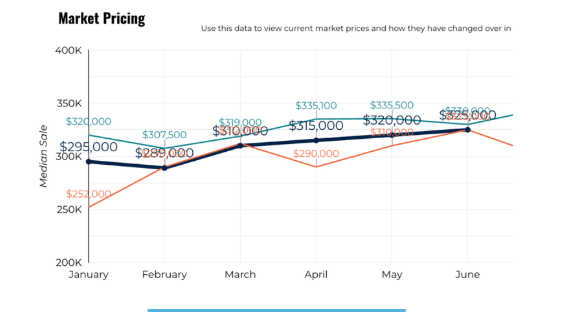
In June 2026, Middleton's median sale price was $559,450 across 188 closings, up from 136 closings in the same month a year earlier. Days on market held effectively flat at 60 versus 59. Over the three months ending May 2026, the median was up 11.9% year over year, with the average sale closing roughly one percent above list and the fastest-moving homes going pending in about 21 days and closing near five percent over ask.
For context, the Dane County single-family median in June 2026 was $537,300, and the Wisconsin statewide median for May was $335,000. Middleton sits about $22,000 above the county line and roughly $224,000 above the state.
The obvious read is that Middleton is expensive and getting more so. The more useful read is that the $559K figure is the weighted center of three price stacks that barely overlap.
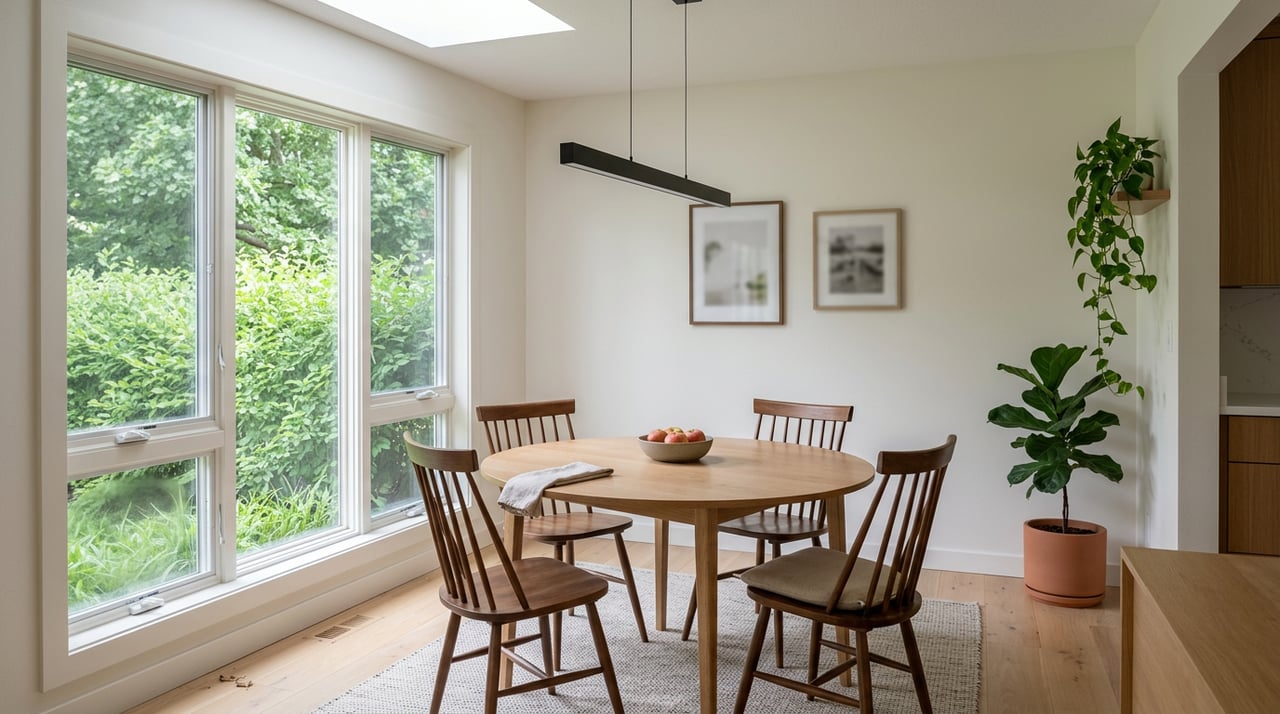
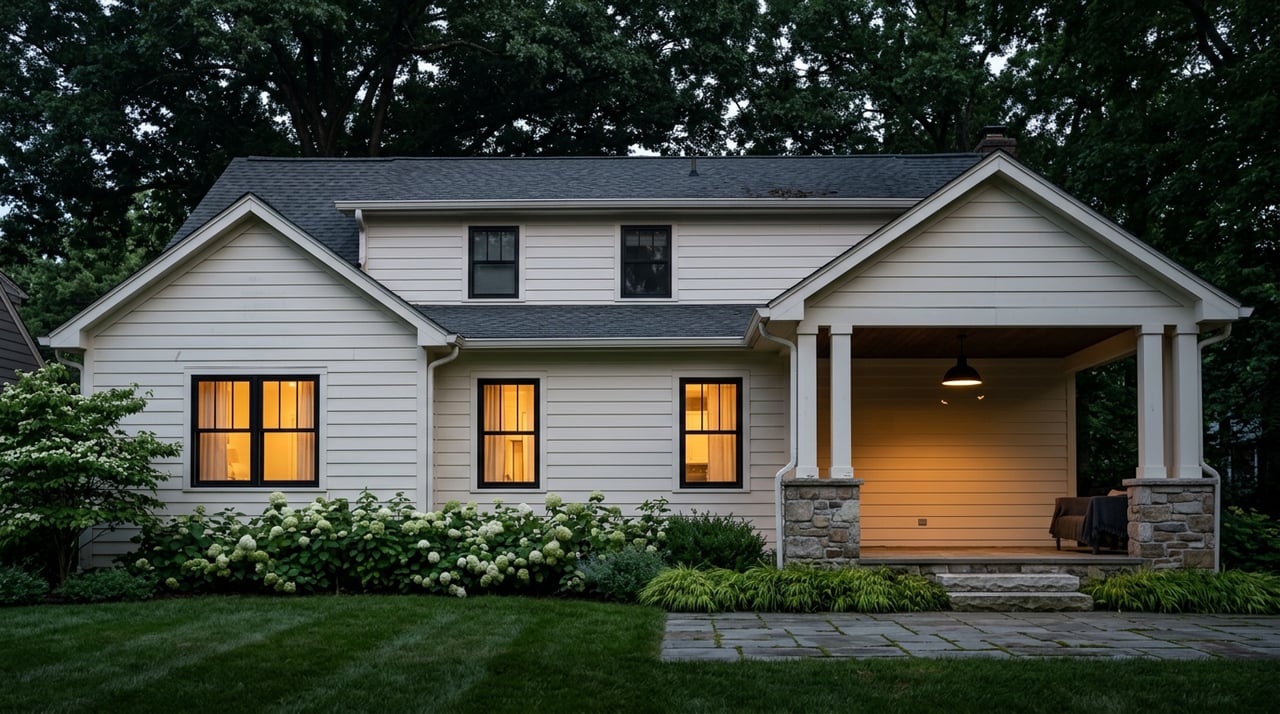
This is the stack that most portal searches surface first, and it is the one driving the "hot" headlines. When Redfin reports the fastest homes going pending in three weeks at five percent above list, it is describing this segment: updated three and four bedroom homes on established streets inside city limits, generally between roughly $475,000 and $750,000.
Two things about this stack matter for offer strategy. First, the year over year volume jump from 136 to 188 June closings is not spread evenly across price points. Much of it clusters in resale single-family, where 2025's inventory drought loosened enough this spring to let deals actually close. Second, days on market barely moved even as volume climbed almost 38 percent, which tells you demand absorbed the new supply almost as fast as it arrived. That is the pattern that produces multiple offers on the well-prepped listing and a week of silence on the tired one two blocks away.
If you are competing here, "the median" is the floor of the fight, not the price.
Here is where the median starts lying to buyers.
Middleton currently has 24 active new-construction communities across nine builders, with starting prices from $379,990 to $718,900 on homes between roughly 1,355 and 2,907 square feet. The bottom of that range sits nearly $180,000 below the citywide median.
The subdivisions behind these numbers are named and mapped. Belle Farm, on the city's expanding edge, is planned for up to 730 multifamily units and 150 single-family homes with 50 percent open space, a ten-foot off-road bike path, a boardwalk, and a dog park. Redtail Ridge is a mixed-density subdivision layered with a mixed-use retirement component, adjacent to the four-building Middleton Valley Apartments project. Just outside city limits, Community of Bishops Bay is moving on a Phase 7 revision.
Two implications for a buyer who assumed $559K was the entry point. First, the true entry to Middleton new construction is closer to $380K, but at 1,355 square feet on the outer edge of the school and commute footprint, that is a different product entirely, not a discount on the median home. Second, builders in this stack rarely negotiate on price the way resale sellers do; they negotiate on incentives, closing credits, and rate buydowns. The offer conversation looks nothing like the one at Submarket One.
The third stack is the one most buyers underweight because it barely exists yet. Middleton has approved or is actively building a stack of attached and multifamily projects that will reshape entry-level and empty-nester product inside the city over the next 24 months.
The anchor is developer Terrence Wall's redevelopment of Old Middleton Centre, backed by conceptual City Council approval of $7.3 million in tax increment financing, which the Wisconsin State Journal described as downtown's largest project since 2003. The plan replaces six aging office and retail buildings on three acres bounded by Elmwood, Hubbard, and Parmenter with seven new structures rising three to five stories, roughly 206 apartments, about 30,500 square feet of commercial space, 36,000 square feet of office, and around 380 parking spaces with 274 underground. Demolition is underway. Walking distance to Capital Brewery and the existing downtown commercial spine is the entire premise.
Around it: The Olmsted, a five-story, 99-unit building. Vern's Redevelopment, a five-story, 70-unit building on the former Vern's Auto Body site. A four-story mixed-use project at 6300 University Avenue with 136 units and 6,000 square feet of retail. Middleton Shores, a seven-story, 110-unit redevelopment. Rockridge, three eight-story buildings totaling 376 units. The Bruce Company redevelopment layering multifamily, commercial, hotel, and park uses on the current Bruce site.
Most of this is rental in the near term. What matters for a buyer is the second-order effect: as new rental supply lands, condo and townhouse resale in and around downtown starts competing against fresh product with modern layouts, and asking prices in the attached segment stop drafting behind single-family. That is a compression, not an appreciation, and it plays out over 18 to 30 months rather than a single quarter.
A rough sketch of what a buyer with a $560,000 budget is actually shopping in July 2026:
| Submarket | Typical product at ~$560K | Competition pattern |
|---|---|---|
| Established single-family | 3–4 bed resale, updated, inside city limits | Multiple offers on prepped listings, fastest go pending in ~3 weeks |
| New construction subdivision | Larger floor plan on the outer edge, base price plus finish upgrades | Builder incentives, rate buydowns, price rarely negotiated |
| Downtown attached | Larger or upgraded condo, or a townhouse near the new Middleton Center | Thinner comps today, pipeline supply arriving 2026–2028 |
The reason "should I offer over ask" has no single answer in Middleton right now is that the correct answer is different in each row.
The June year over year comparison is worth pausing on. Closings up 38 percent. Days on market flat. This is what a market looks like when latent buyer demand meets a normalizing inventory pipeline in real time. Sellers who waited out 2024 and early 2025 finally listed. Buyers who had been sidelined absorbed the new listings almost as fast as they came on. Neither side got the upper hand.
For sellers, that means the "just list it and wait" strategy that worked in 2021 does not work now. Prep, staging, and pricing at the intersection of the correct submarket comps are doing the work. For buyers, it means the runway between listing and pending is not lengthening, which limits how much time an inspection response has to breathe.
Three signals will tell you which submarket is moving:
Is Middleton's 11.9 percent year-over-year price increase sustainable? The gain reflects a mix shift as much as pure appreciation. As more attached and new-construction product closes, the composition of the median will change, which can make the headline number swing without individual home values moving the same amount.
Does the downtown redevelopment help or hurt current condo owners? Both, in sequence. Near-term, the redevelopment strengthens the walkable-downtown premise. Medium-term, more attached inventory can compress pricing power on resale condos that have not been updated.
Is new construction actually cheaper than resale? The base prices are lower on paper. The finished, upgraded, landscaped version of the same home lands closer to, or above, the resale median. Comparing base to sale price is the trap.
The Middleton median is a headline, not a strategy. Buyers who treat it as a single number tend to lose offers in Submarket One and overpay in Submarket Three. Sellers who price to the citywide median rather than to their actual comp set leave money on the table or sit through a slow spring.
If you want a read on which of the three Middleton markets your specific home, budget, or timeline actually belongs in, Alan Feder at Madison Home Guides works through the comp set with you before the offer, not after. Let's connect.
Dane County Home Prices

Alan is committed to delivering a seamless and rewarding real estate experience through expert advice, strategic marketing, skilled negotiation, and exceptional client service tailored to your unique needs.
Alan Feder
ADDRESS 5940 SEMINOLE CENTRE CT STE 310 MADISON, WI 53711